Guided selling is a way to actively guide customers toward the right choice in your webshop. Instead of letting visitors search through dozens of products on their own, you help them step by step with targeted questions. This results in less doubt, more confidence, and ultimately higher conversion.
More and more webshops use guided selling as an alternative or addition to filters. Especially with a large or complex assortment, it has proven to be an effective way to better support customers.
What is guided selling?
The meaning of guided selling is simple: guided purchasing. You ask the customer questions about their situation, needs, or use case, and based on their answers you present a suitable product or recommendation.
Instead of technical filters such as dimensions or specifications, you use easy-to-understand questions like:
- What will you use the product for?
- How large is the space?
- How much experience do you have?
Based on these answers, the selection automatically becomes smaller and more relevant. The customer doesn’t have to figure everything out on their own.
Why guided selling works better than filters alone
Many webshops rely entirely on filters. That seems logical, but filters assume that customers know exactly what they are looking for. In practice, that’s often not the case.
Guided selling in a webshop works differently:
- You translate product knowledge into simple questions
- You prevent choice overload
- You guide instead of forcing customers to search
Filters are useful, but guided selling is especially effective for customers who are unsure. And that group is exactly the one that often drops off otherwise.
How does guided selling work in a webshop?
A good guided selling flow usually consists of a few clear steps.
Step 1: Start with the customer’s need
The focus is not on the product, but on the customer’s problem. This makes the first question feel immediately relevant.
Step 2: Ask short, clear questions
Each question should feel logical and be easy to answer. One question per screen often works best.
Step 3: Narrow down the options
After each question, options are filtered out. This creates clarity and peace of mind.
Step 4: Provide explanation where needed
A short explanation alongside a question or choice increases trust and understanding.
Step 5: Show a recommendation or selection
This can be a single product or a small selection that matches the answers given.
Guided selling example
Imagine a webshop selling technical products with many variations. Without guidance, customers see dozens of options and don’t know where to start.
With guided selling, the process looks like this:
- What will you use the product for?
- Is it for indoor or outdoor use?
- How intensively will you use it?
- What matters more to you: price or quality?
After these questions, the customer receives a clear recommendation. It feels personal and expert-driven, even though it is fully automated.
Which webshops benefit most from guided selling?
Guided selling works especially well for:
- webshops with a large product range
- technical or specialist products
- products where choosing incorrectly causes issues
- B2B webshops
- webshops with high return rates
But even for simple products, a buying guide can help customers make faster decisions.
Ready to get started?
Discover how Bebolu helps your webshop grow with interactive product finders.
Book a demo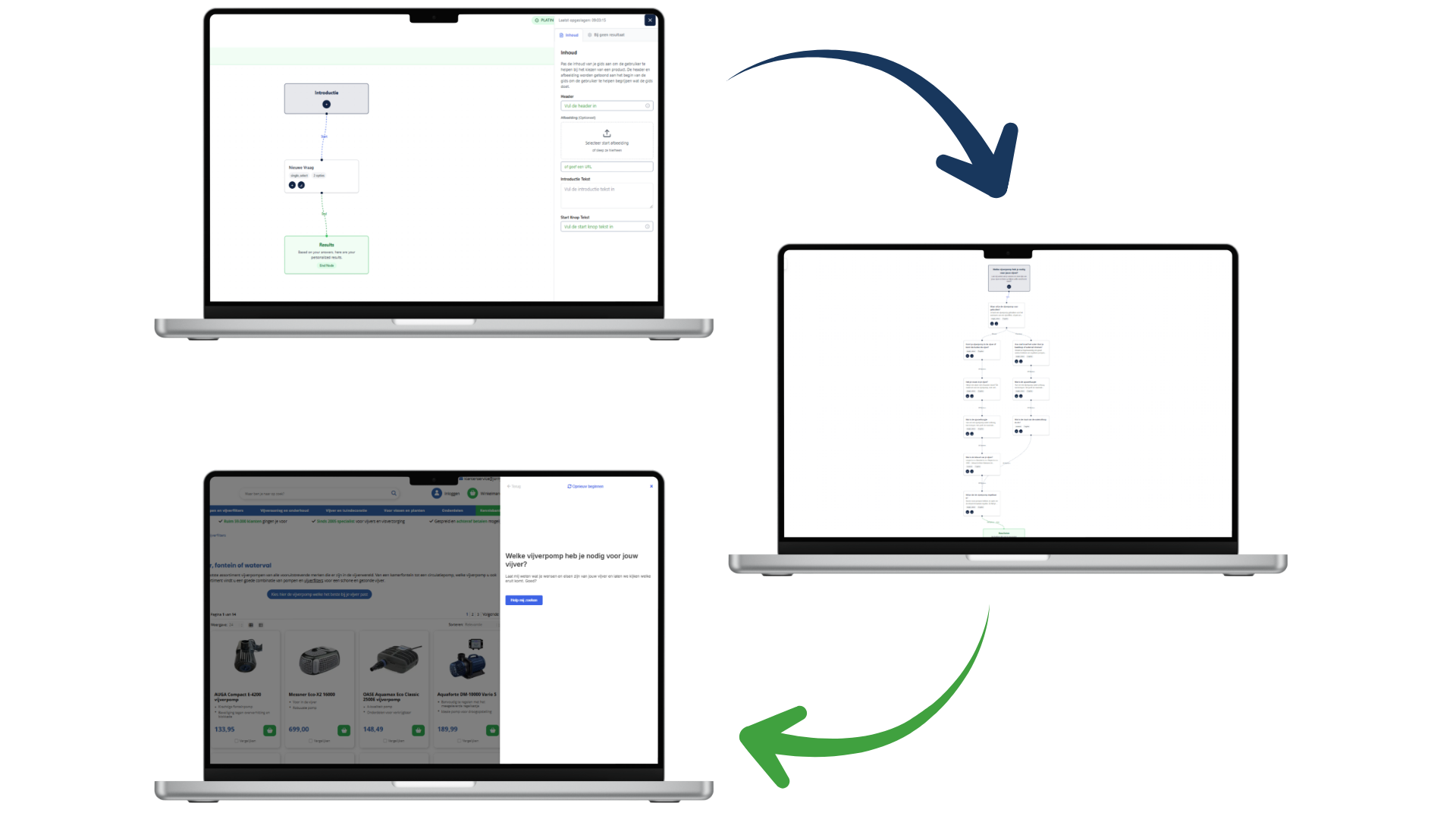
The benefits of guided selling
Higher conversion
Customers who are guided make purchases more often. They feel more confident about their choice.
Fewer returns
A better match between customer and product leads to fewer mistakes and returns.
Better customer experience
The webshop feels more personal and helpful.
More trust
Guided selling shows that you understand your products and actively help customers.
Insight into customer behavior
The answers provide valuable insights into what customers find important.
Common mistakes in guided selling
A buying guide only works well if it is set up properly. Common mistakes include:
- asking too many questions
- using overly technical language
- unclear questions
- providing no explanation
- showing too many products as a result
Less is more. A short, clear flow often works better than a long questionnaire.
Guided selling as part of the customer journey
Guided selling fits best in the comparison phase of the customer journey. It helps hesitant shoppers make a decision and prevents them from dropping off or looking elsewhere.
It doesn’t replace product pages or content, but strengthens them. Together, they create a smooth buying experience.
Is guided selling a trend?
No. Guided selling is a logical development in e-commerce. It aligns with how people make decisions: with guidance, explanation, and confidence.
Webshops that invest in this approach stand out from competitors that only display products.
Conclusion: why guided selling is becoming increasingly important
Guided selling helps customers choose without overwhelming them. By asking the right questions, you make the buying process simpler and more enjoyable. This leads to higher conversion rates, fewer returns, and more satisfied customers.
For webshops with a growing assortment, guided selling is not an extra — it’s a smart step toward better online sales.